Talk to your doctor first if…
This article is for general information only and is not medical advice. It does not replace a consultation with your doctor, a registered dietitian (RD/RDN), or another licensed health professional. Talk to a professional before making significant changes to your diet or exercise routine, especially if you have a chronic condition, take other medications, are pregnant or breastfeeding, or have a history of eating disorders.
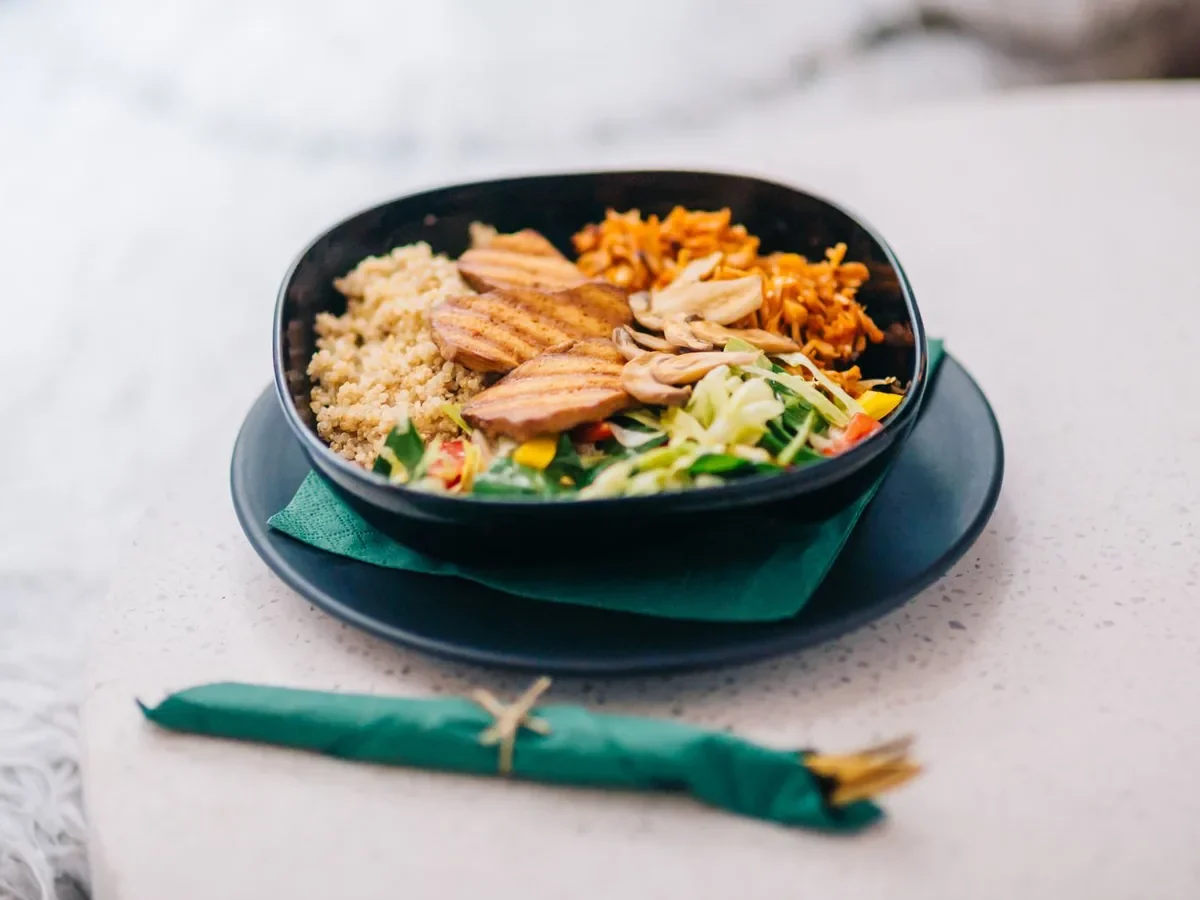
On a GLP-1 medication, eat small, regular meals that put protein first, sip fluids through the day, and favor gentle, nutrient-dense foods. Your appetite drops, so each bite has to do more work. Here is how that looks on a plate.
Key takeaways
Your stomach empties more slowly on a GLP-1, so you feel full sooner. Smaller portions are the medication working as designed, not a willpower win.
Protein, fluids, and nutrient-dense foods are the three priorities. They help protect muscle and head off dehydration and shortfalls in key nutrients.
Nausea and constipation are among the most common digestive complaints. Both usually respond to small, plain meals, steady fluids, and fiber added slowly. If they don’t ease, call your prescriber.
What this article covers
This article covers nutrition and lifestyle habits that people often discuss with their care team while taking a GLP-1 medication. It does not cover dosing, which medication to choose, or whether you should take one. Those decisions belong to you and your prescriber. Only use FDA-approved medications obtained with a prescription from a licensed pharmacy, and report side effects to your doctor.
What does eating change on a GLP-1?
A GLP-1 slows how fast your stomach empties. Food stays put longer, so you feel full sooner and stay full longer. That is the mechanism working as designed.
It is a physiological change, not a character change. If you used to finish a big plate and now stop halfway, nothing is wrong with you. Your body is getting a different signal. It is not an addiction beaten. It is a shift in how fullness works.
One note on names. Several GLP-1 medications are approved for weight management, including Wegovy, the Wegovy pill, Zepbound, Foundayo, and Saxenda. Ozempic and Mounjaro are approved for type 2 diabetes, and using them for weight is off-label. Which one fits you is a conversation for your prescriber, not a diet article.
Why nutrition matters while taking a GLP-1
Smaller portions mean every bite counts. When you eat less, it is easier to fall short on protein, fluids, and vitamins and minerals. Iron, B12, and calcium are common worries. If you suspect a gap, ask your prescriber rather than guessing. Whether you need anything beyond food is a medical question.
The risks are practical. You can lose muscle along with weight, get dehydrated without noticing, or feel worn out because you are eating too little. Studies of how people eat on these medications show dehydration often goes unnoticed, and it can worsen constipation and fatigue.
A joint advisory from several nutrition and obesity organizations in May 2025 points to the same priorities. These are enough protein, strength training at least 2 days a week, minimally processed nutrient-dense foods, preventing deficiencies, and managing digestive effects such as hydration and regular portions.
Protein: why it’s non-negotiable
When you eat in a calorie deficit, your body loses some muscle along with fat. Protein and strength training slow that down. Protein also helps you feel satisfied, which matters when you are eating less.
Spreading protein across your meals helps; ask your prescriber or a registered dietitian for a daily target that fits you. Examples: an egg has about 6 g, Greek yogurt about 15 g, and 3 oz of lean chicken about 26 g. If your usual intake is low, build up gradually. Don’t jump overnight.
On a bad nausea day, eat the protein first, even if it’s only a few bites. The rest of the plate can wait.
Want a personal protein number instead of a rule of thumb? Plug your details into the protein intake calculator, then bring the result to your care team.
If you have kidney disease, discuss protein intake with your doctor.
Hydration and regular eating rhythm
Drink fluids steadily through the day, not only when you feel thirsty. Many people on a GLP-1 get dehydrated without realizing it. Water-rich foods count too: soups, broths, yogurt, and gelatin.
Eat at regular times rather than skipping meals. Regular small meals keep your total nutrition up better than skipping and then forcing down a large one.
Constipation is common on these medications. Go in order. Start with fluids. Then add fiber slowly, since a sudden jump can backfire. For reference, the adequate intake for fiber is 25 g for women and 38 g for men up to age 50.
Managing nausea (the most common side effect)
Nausea, constipation, and diarrhea are the common digestive effects. Nausea is frequent, especially in the first weeks. It usually improves within a few weeks, but if it doesn’t, talk to your prescriber.
- Pick soft, neutral foods. Yogurt, scrambled eggs, and poached chicken are easy starting points.
- Skip the triggers. Fried, greasy, sweet, and spicy foods, plus store-bought sauces, tend to make nausea worse.
- Use the good hours. Many people tolerate breakfast better than lunch or dinner, so make it count.
- Sip between meals. Small sips go down easier than big gulps.
- Try ginger. Tea or freshly grated ginger helps some people.
- Lead with protein. Even a tiny portion first is worth it.
Foods that work, and what to limit
These foods are generally well tolerated: lean meats such as chicken and white fish, eggs, yogurt, cottage cheese, fruits like bananas and apples, cooked vegetables like carrots, zucchini, and spinach, white rice or whole-grain pasta, and nuts in moderation.
These are worth limiting or avoiding: fried foods, very fatty foods, very sugary foods, ultra-processed foods, alcohol, and coffee on an empty stomach. They tend to worsen nausea and give you little nutrition in a small portion.
Usually easier to tolerate
Lean protein, eggs, yogurt, cottage cheese, cooked vegetables, bananas, apples, rice, and a modest handful of nuts.
Worth limiting
Fried or greasy dishes, sweets, ultra-processed snacks, alcohol, and coffee before you have eaten.
Myth
On a GLP-1 you have to cut carbs and sugar completely.
What the evidence says
No. Whole grains, fruits, and starchy vegetables are fine. The ones to limit are ultra-processed sugary foods.
Meal size and frequency
Aim for 3–5 small meals or snacks instead of two large ones. Here is a loose frame, not a personal plan: breakfast around 200 kcal, lunch and dinner around 300–400 kcal each, and snacks around 100–150 kcal each. Put protein in every meal, even small ones.
Eating very little on a regular basis is a risk of its own. Consistently going under 1,200 kcal a day without medical supervision is a reason to check in with a doctor.
Talk to your doctor first if…
You have kidney disease, since protein needs adjusting. Call as well if you have persistent nausea, vomiting, or constipation for more than 3 days, or signs of dehydration such as dark urine, dizziness, or extreme fatigue. The same goes if you are eating under 1,200 kcal a day without supervision, are malnourished or deficient in a nutrient, or take other medications that can be affected by eating less or at different times. If you have severe side effects from a GLP-1 medication, contact your prescriber, or call 911 if it’s an emergency.
Go further
Weight loss timeline calculator: see a realistic time frame for your goal.
Frequently asked questions
Can I eat normally again when I stop taking a GLP-1?
Weight regain is common. In one study extension, roughly 2/3 of the weight lost came back within a year after stopping. Nutrition and activity stay your best tools for keeping weight off. Talk to your doctor about a plan before stopping.
Will a GLP-1 diet alone make me lose weight?
A GLP-1 reduces hunger and portions, but results also depend on what you eat. Prioritizing protein, fluids, and whole foods supports what the medication does. Results vary.
Do I need to count calories while on a GLP-1?
Many people find it unnecessary because portions shrink on their own. If progress stalls, tracking can help. That is especially true if you are eating past fullness or accidentally undereating.
Is this a permanent diet?
Think of it as a way of eating well in smaller portions, not a diet with an end date. The habits are meant to work while you take the medication and to make the transition easier if you stop.
Should I avoid carbs or sugar entirely?
No. Whole grains, fruits, and starchy vegetables are fine. Limit ultra-processed sugary foods, which tend to worsen nausea and add little nutrition in a small portion.