How much protein do you really need? It depends on your weight, your age, your activity level, and your goal. The baseline is 0.8 grams per kilogram of body weight per day. The current Dietary Guidelines point to 1.2–1.6 grams per kilogram for many adults, and this page shows you how to find your own number.
Key takeaways
The RDA from the National Academies is 0.8 g/kg a day. It is a floor for healthy adults, not a goal.
The Dietary Guidelines for Americans 2025–2030 point to 1.2–1.6 g/kg a day. That range fits weight loss, strength training, and keeping muscle as you age.
Every result is an estimate. If you have kidney disease, take insulin, are pregnant, or use a weight-loss medication, ask your doctor before you change your protein.
Find your number
You need four inputs: your weight in pounds, your age, your activity level, and your goal. Your goal can be weight loss, maintenance, muscle building, or general health. The result is a range in grams per day, plus the grams-per-kilogram figure behind it.
Treat that range as a starting point. Individual needs vary by about 10%. The calculation runs in your browser, so your weight and age stay on your device.
You can also do it by hand in four steps.
- Convert your weight. Divide your weight in pounds by 2.2046 to get kilograms.
- Pick your range. Use 0.8 if you are sedentary and healthy. Use 1.2–1.6 if you are cutting calories, lifting, or aiming at the current guidelines.
- Multiply. Your weight in kilograms times your g/kg figure gives your grams per day.
- Test it for 1–2 weeks. If the target feels off, adjust by 5–10 grams and check again.
Want to pair your protein target with a calorie target? The calorie deficit calculator gives you the other half of the plan.
The baseline: RDA vs. the new Dietary Guidelines
Two numbers shape most protein advice in the US. They answer different questions.
The RDA is a floor. The Dietary Guidelines for Americans 2025–2030, published on January 7, 2026, point higher.
RDA (National Academies)
The minimum for healthy adults is 0.8 g/kg a day. It works as a baseline if you are sedentary and not trying to change your body.
Current Dietary Guidelines
The range is 1.2–1.6 g/kg a day. Most adults now aim for it, especially when cutting calories or building strength.
Why the higher range? Research on calorie restriction, including work by Wycherley and colleagues (2012) and Leidy and colleagues (2015), links this range to better lean-mass retention and more fullness while you lose weight.
Many US adults fall short of the range, and women do so more often. The exact share depends on the data source, so treat any single percentage with care. The older 2020–2025 guidelines are no longer current, because the new edition replaced them.
Weight loss
Aim for 1.2–1.6 g/kg a day. When you eat less, your body can lose muscle along with fat. Protein helps protect that muscle and keeps you fuller.
The CDC links a steady pace of 1–2 lb a week to lasting weight loss, and adequate protein supports that pace. If you are in a calorie deficit, lean toward the higher end of the range.
Muscle building
Aim for about 1.6 g/kg a day. Morton and colleagues (2018) found that gains from protein with resistance training level off around that point. Some very intense programs go up to 2.0 g/kg, but past 1.6 the extra return is small.
General health
Aim for 1.2–1.6 g/kg a day to match current guidelines. If you are sedentary and healthy, 0.8 g/kg is the minimum. People who exercise regularly often land between 1.2 and 2.0 g/kg, depending on volume and intensity.
When you need more protein
Some situations push you toward the top of your range.
After age 40. Muscle declines by roughly 3–8% per decade. Higher protein plus strength training can slow that loss.
In a calorie deficit. The bigger the gap between what you eat and what you burn, the more it matters to protect lean mass. Pick the higher end of your range. To see how long a deficit takes, try the weight loss timeline calculator.
Strength training at least twice a week. Aim for 1.4–1.6 g/kg or a little more if you want to see muscle gains.
On a GLP-1 medication. A joint advisory from the ASN, ACLM, OMA, and TOS (May 2025) says enough protein plus resistance training helps preserve muscle during weight loss. Your prescriber can give you a specific target. Use theirs rather than a calculator’s.
Myth
More protein is always better, so push as high as you can.
What the evidence says
For muscle gain, the benefit of added protein levels off around 1.6 g/kg a day. Going well past that adds little.
When to talk to your doctor first
Talk to your doctor first if…
You have kidney disease or are on dialysis. Do not adjust your protein on your own. Higher intake needs a nephrologist’s approval.
You take insulin or sulfonylureas and plan to cut calories or fast. There is a risk of low blood sugar, so any change needs medical guidance first.
You are pregnant or breastfeeding. Needs differ, and a general calculator does not cover them.
You use a GLP-1 or another weight-loss medication. Ask your prescriber for specific targets.
You are over 65 and your weight is changing without a reason.
This page does not build a plan for anyone with a medical condition. If one of these applies to you, treat the calculator output as a conversation starter, not an instruction.
How the math works
The formula is simple. Weight in kilograms times your g/kg figure equals grams per day. To get kilograms, divide pounds by 2.2046.
If a calculator also estimates your calorie needs, it likely uses the Mifflin-St Jeor equation for resting energy. It is widely accepted, but individual error runs around 10%. That is why every result is labeled an estimate. If you want your calorie number first, the TDEE calculator covers that step.
A margin of about 10% is normal. Use your target for 1–2 weeks. Then, if hunger, energy, or training feels off, move up or down by 5–10 grams and reassess.
Frequently asked questions
Can I get enough protein from plants?
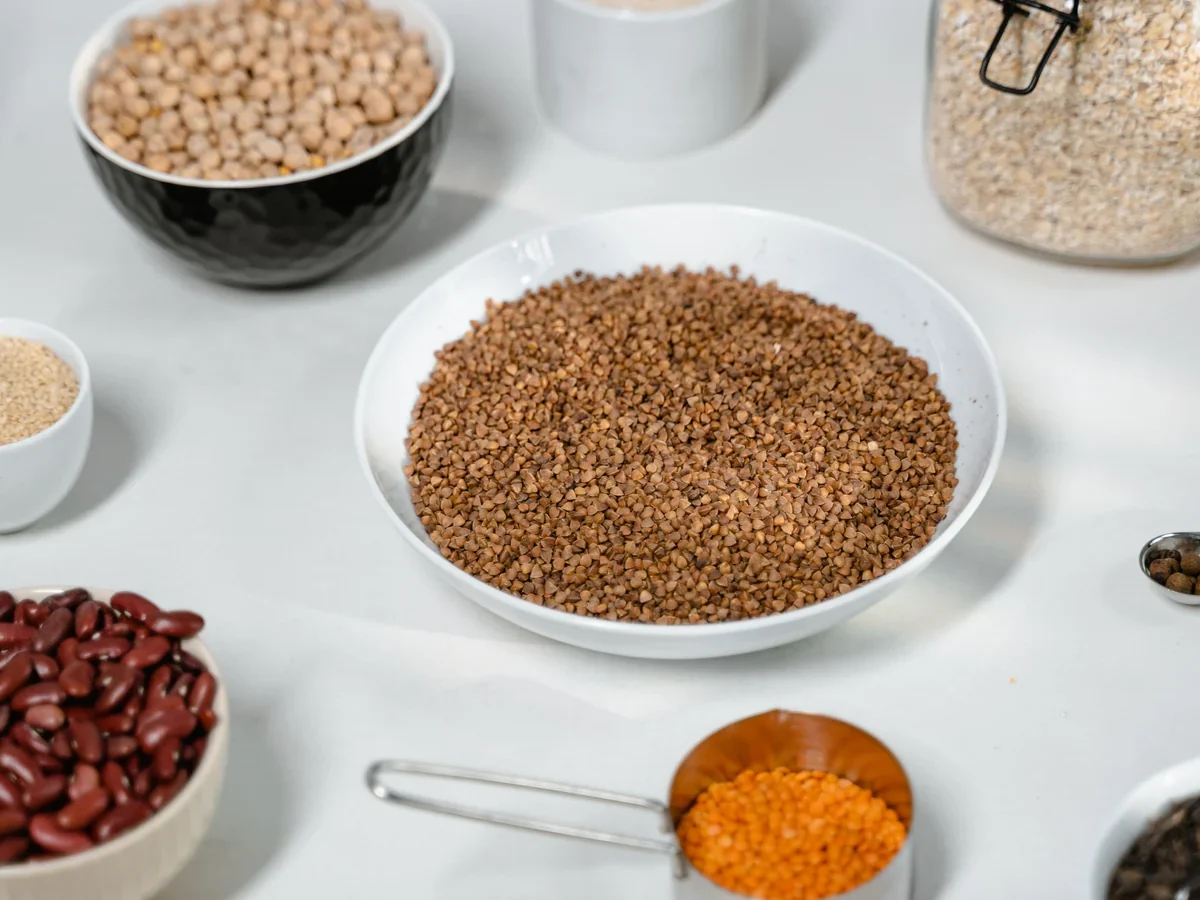
Yes. Variety and portion sizes matter more when you rely on plants. If you are unsure whether your meals add up, ask a qualified health professional to review your intake.
Do I need a protein powder?
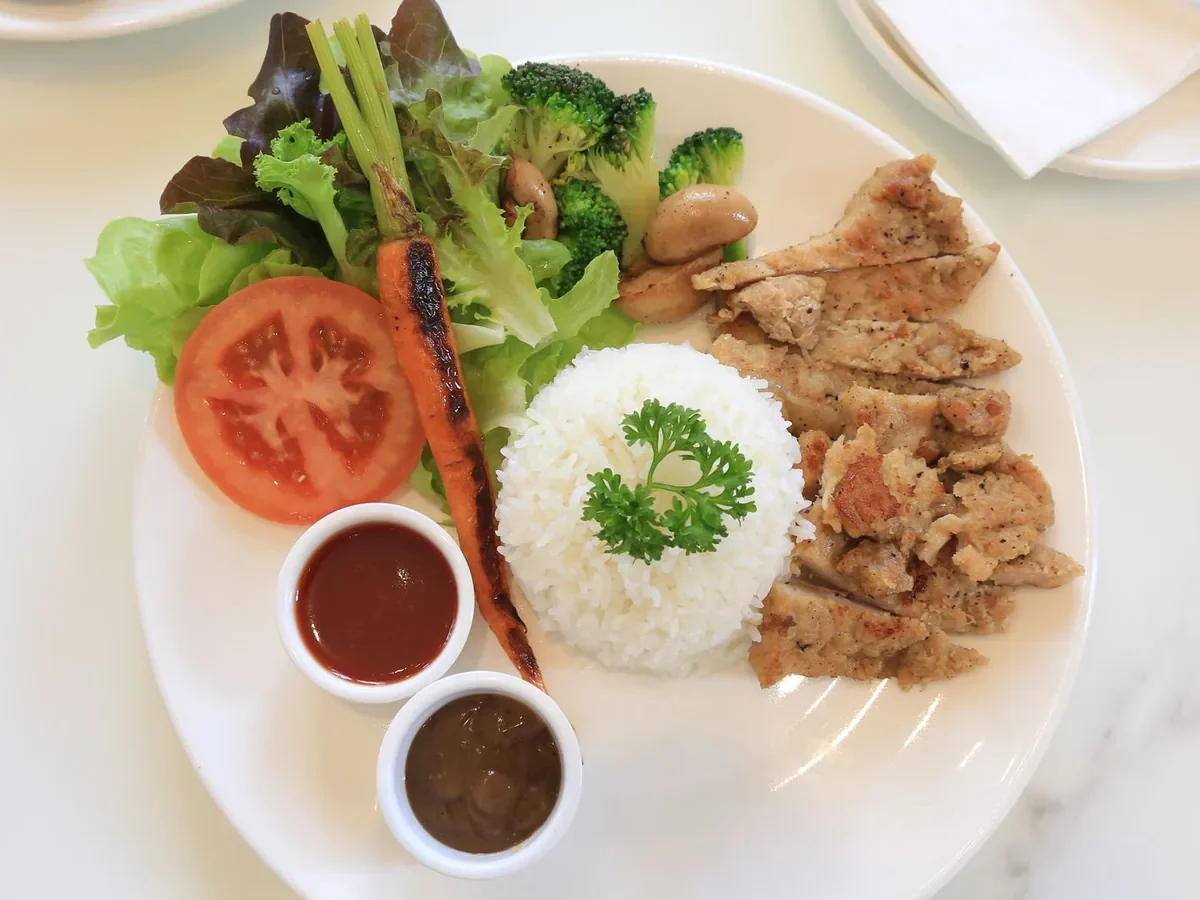
No. Whole foods work as well if you reach your target. Powders are a convenience, not a requirement.
What if I have kidney disease or diabetes?
Talk to your doctor before you raise your protein. Kidney disease calls for specialist guidance. Diabetes treated with insulin or sulfonylureas calls for care when you also cut calories.
Why do women often fall below the target?
Many US adults miss the 1.2–1.6 g/kg range, and women do so more often. Portion sizes and food access are part of the reason. A modest increase at each meal is often easier than a big change at one.
Sources
DietaryGuidelines.gov — Dietary Guidelines for Americans
National Academies of Sciences, Engineering, and Medicine — Dietary Reference Intakes
CDC — Healthy Weight, Growth, and Obesity
Wycherley TP, et al. Am J Clin Nutr. 2012;96(6):1281–1298. A high-protein diet with resistance exercise training improves weight loss and body composition in overweight and obese patients.
Leidy HJ, et al. Am J Clin Nutr. 2015;101(6):1320–1329. The role of protein in weight loss and maintenance.
Morton RW, et al. Br J Sports Med. 2018;52(6):376. Systematic review, meta-analysis and meta-regression of protein supplementation on resistance training-induced gains in muscle mass and strength.