Meal prep won’t make the scale move faster on its own. What it does is make a steady calorie deficit easier to hold, because you decide once, measure once, and then just eat. That is the honest case for it, and it is a good one.
Key takeaways
Weight loss still comes from a calorie deficit. Prep is a tool that helps you stick to it, not a way to speed it up.
Portioning food ahead of time cuts down on guesswork, and guesswork is where calories tend to creep in.
Start small this week: one protein, one grain, one vegetable, and a few boxed meals.
What meal prep is, and why it matters for weight loss
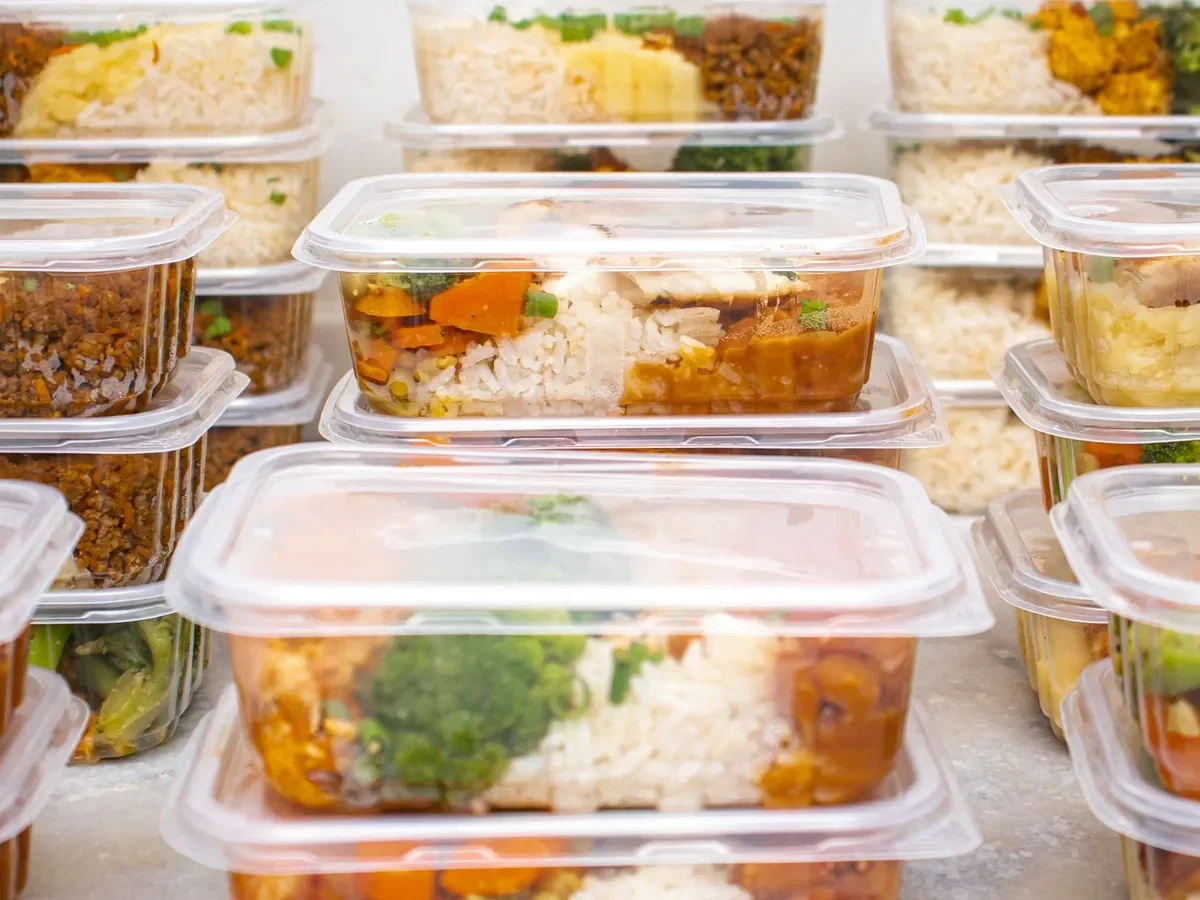
Meal prep means cooking several meals, or the building blocks of meals, in one or two sessions. Then you eat from that stash through the week. You can prep whole meals in boxes or just cook components and mix them as you go.
The link to weight loss is simple. Fewer decisions during a busy day means fewer impulsive ones. When the food is already cooked and portioned, the plan is the easiest thing to reach for.
NIH-backed reviews on dietary management describe a range of practical strategies and tools that can support weight management by lowering energy density, providing portion control, and improving diet quality. Planning and prepping meals touches all three.
This is not a “clean eating” project. You don’t need special foods, and you don’t need to feel bad about the weeks you winged it. You just need a system that works on a normal Tuesday.
How meal prep supports a calorie deficit
The math of weight loss doesn’t change because you own a stack of containers. The CDC links a pace of about 1–2 pounds a week with lasting weight loss, and that pace comes from a daily deficit of roughly 500–1,000 kcal.
Where prep helps is in holding that deficit. Without a plan, portions are a guess, and research on dietary adherence points to calorie underestimation as a common problem. You think you ate a reasonable amount, and the real number was higher.
With prep, you weigh or measure once. Then you eat that portion several times without redeciding. Portion-controlled servings, which are foods of predetermined quantity and calories, are tied to better dietary adherence in the NIH-supported literature.
Notice what that does and doesn’t claim. Prep helps you keep the deficit from drifting. It does not create one by itself, and no one can say how much weight a container of chicken and rice will take off.
Planning your meals: the basic framework
You don’t need a spreadsheet. You need a short list of foods you will actually eat, and a rough idea of how much of each.
- Pick your building blocks. Choose 2-3 proteins, 2-3 grains or starches, and 2-3 vegetables. Mixed together, that gives you 6-9 combinations, so you get variety without a pile of decisions.
- Write down portions. Set a protein amount in grams, a grain amount in ounces, and a vegetable amount in cups, based on your calorie needs. To estimate those needs, try the TDEE calculator.
- Build the shopping list from the plan. Buy what the plan calls for and not much else. Random shopping trips tend to cost more and bring home more processed food.
People who plan their meals tend to buy more whole foods and fewer ultra-processed ones. That matters because food quality shapes how full you feel on a given number of calories.
Protein and fiber deserve a spot in every box. Both help with fullness, and protein also helps preserve lean mass while you eat less. Prep makes it easy to dose them on purpose instead of hoping they show up.
Portions and measurement tools
Our sense of a “normal” portion drifts easily. A bowl gets bigger, a scoop gets heavier, and nobody notices. Measuring pulls you back to what the plan says.
You have three simple options, from most to least exact:
Kitchen scale
The most exact tool. Weigh once, note the number, and you’re done. Best if you want tight control over your portions.
Measuring cups
Quick and good enough for most people. Less exact for dense foods, but fine for rice, grains, and chopped vegetables.
Your hand is a third option. It is rough, but it’s acceptable when you’re just starting out. Many people begin there and move to a scale once the habit sticks.
Do you have to weigh everything? No. Approximate tools are enough. What counts is doing it regularly, because the goal is a stable pattern and not a perfect one.
Pair the measuring with some tracking. NIH guidance suggests recording your daily food intake and physical activity using an app on your phone or a journal. Prepped meals make that easy, since you log the same boxes again and again.
What to prep ahead: shopping and batch cooking
Prep the parts that take the longest and keep well. That usually means cooked proteins such as chicken, eggs, or tofu, cooked grains such as rice, pasta, or oats, and vegetables, either roasted or washed and cut raw.
This approach gives you enough for 3-5 meals without cooking every dish from scratch. You balance effort against variety, and you can still change the flavor day to day with a sauce or a seasoning.
A useful trick: batch one recipe 3 times over, instead of cooking 3 different recipes once each. It cuts the work and keeps the shopping list short.
How long will it take? That depends on how many meals you make and how complicated they are. A typical starter session runs 1-2 sessions of 1-2 hours a week. Your own time will vary, and it usually gets shorter as you find a rhythm.
Food storage and safety
Cooked portions keep in the refrigerator for 3-4 days at most. That is the standard food-safety guidance, so plan your week around it. If you want meals further out, use the freezer, where prepped food holds for about 2-3 months.
Label each container with the contents and the date. It takes a few seconds, and it saves you from guessing what’s safe to eat.
This is also why a full month of prep doesn’t work. Quality drops, and safety limits get in the way. Prepping for 3-5 days is the practical ceiling for the fridge.
Common mistakes that sabotage results
Most prep plans fail in a few predictable ways.
Going all-in at once. A huge first prep day is tiring, and tiring plans get dropped. Start with 2 meals, for 1 day, and let the habit build from there.
Prepping heavy, salty, or sugary food. If the boxes are full of processed food or rich sauces, the quality benefits disappear. Prep is only as good as what goes in it.
Skipping the portion check. Weigh once, write the number down, and you’re set. Skipping this step brings back the guesswork you were trying to remove.
Expecting prep to do everything. Eating less works better alongside movement. Combining calorie reduction with physical activity is more effective than restriction alone, and prep frees up time for that. See physical activity for weight loss for the other half of the picture.
Myth
Meal prep is the secret to losing weight.
What the evidence says
Prep is one tool for keeping a calorie deficit steady. People also lose weight by tracking in an app or in other ways. What matters is the stable deficit, not the method.
Getting started this week
- Sunday: choose three foods. Pick 1 protein, 1 grain, and 1 vegetable. Keep it simple.
- Shop for just those. Buy only what the plan needs.
- Cook for about 2 hours. Cook the protein and the grain, and roast the vegetable.
- Divide into 3 portions. Use boxes, and use your measuring tool.
- Eat them Monday through Wednesday. Then, on Tuesday, jot down how it went: effort, hunger, and taste.
- In week 2, change one thing. If it worked, add 1 more meal or 1 new flavor.
Not sure how much to put in each box? Check your daily target with the calorie deficit calculator before you portion anything.
Talk to your doctor first if…
You are pregnant, you are a teen, or you have a medical condition such as diabetes. The same goes if you take medication that affects your appetite or blood sugar. Eating less is not right for everyone, and a clinician can tell you what is safe for you.
Go further
10 High-Protein Meals for Weight Loss (25-40 g Protein)
Protein intake calculator: get your daily protein range in grams.
Frequently asked questions
How long does meal prep take?
It depends on how many meals you make and how complex they are. A starter session of 1-2 hours is a reasonable place to begin, and it tends to get faster with practice.
Do I save money with meal prep?
Often, yes. You make fewer impulse purchases and eat out less. How much you save depends on your habits, so no single figure applies to everyone.
Can I prep for a full month?
No. Quality drops, and the fridge limit is 3-5 days at most. Use the freezer for anything you want to keep longer.
What if I’m on a special diet?
The principles stay the same: portions, tracking, and food quality. Adjust the protein, grain, and vegetable choices to fit your needs, and check with your doctor if you have a condition.
Is meal prep necessary to lose weight?
No. It’s a tool for holding a steady deficit. Some people fast, some track in an app, and some prep. What matters is that the deficit stays stable.