A 1,500-calorie day is a commonly recommended target for adult women who want to lose weight at a steady pace. It sits about 500 kcal below the typical daily needs of an average sedentary woman, which is roughly 2,000 kcal. This guide shows you how to structure that intake, what a day of eating can look like, and when to check in with a doctor first. It is education, not medical advice.
Key takeaways
The CDC links a pace of about 1–2 pounds a week with lasting weight loss. A daily deficit of about 500 kcal lines up with roughly 1 pound a week.
1,500 kcal is “commonly recommended” for women, not right for everyone. Men, very active people, and taller or heavier people may need more.
Protein, fiber, and enough fat keep you full. Total calories matter more than which diet style you pick.
Is a 1,500-calorie plan right for you?
This target is typically aimed at adult women, 18 and older, who are sedentary to lightly active and have no medical conditions. For men, 1,500–1,800 kcal is typical, and most men should not go below 1,500 kcal without medical supervision.
A commonly cited minimum without medical supervision is about 1,200 kcal a day for women and 1,500 kcal for men. It’s a rule of thumb, not a target, and many people need more. That is a guideline, not a law. If you are below it, check in with a doctor.
It is also worth knowing what 1,500 kcal is not. It is not a very low-calorie diet. Those are under 800 kcal a day and require medical supervision. At 1,500 kcal you are doing standard calorie restriction.
Talk to your doctor first if…
You are pregnant or breastfeeding. You have type 1 or type 2 diabetes, especially if you take insulin or sulfonylureas. You have chronic kidney disease or a history of eating disorders. You are underweight or a very active athlete. You are under 18, or over 65 with unexplained weight changes. This plan is not built for any of these situations, and personalized meal plans for diagnosed conditions belong with a licensed dietitian.
If eating, weight, or exercise feel out of control, call or text 988.
How to hit 1,500 calories: the math
Start with your estimated daily burn, often called TDEE. It is the number of calories you use in a day, including movement. For an average sedentary woman it is around 2,000 kcal. You can get a personal estimate with the TDEE calculator.
Eat 500 kcal below that number and you land near 1,500 kcal. The common rule of thumb is that roughly 3,500 kcal equals 1 pound, so a 500 kcal daily gap works out to about 1 pound a week. Treat it as a short-term rule that real bodies adjust.
Expect some adaptation after about 4–6 weeks. Your body uses a little less energy as you weigh less and eat less. The effect is modest. It does not stop weight loss, and it is not “starvation mode.”
Sample day: 1,500 calories at a glance
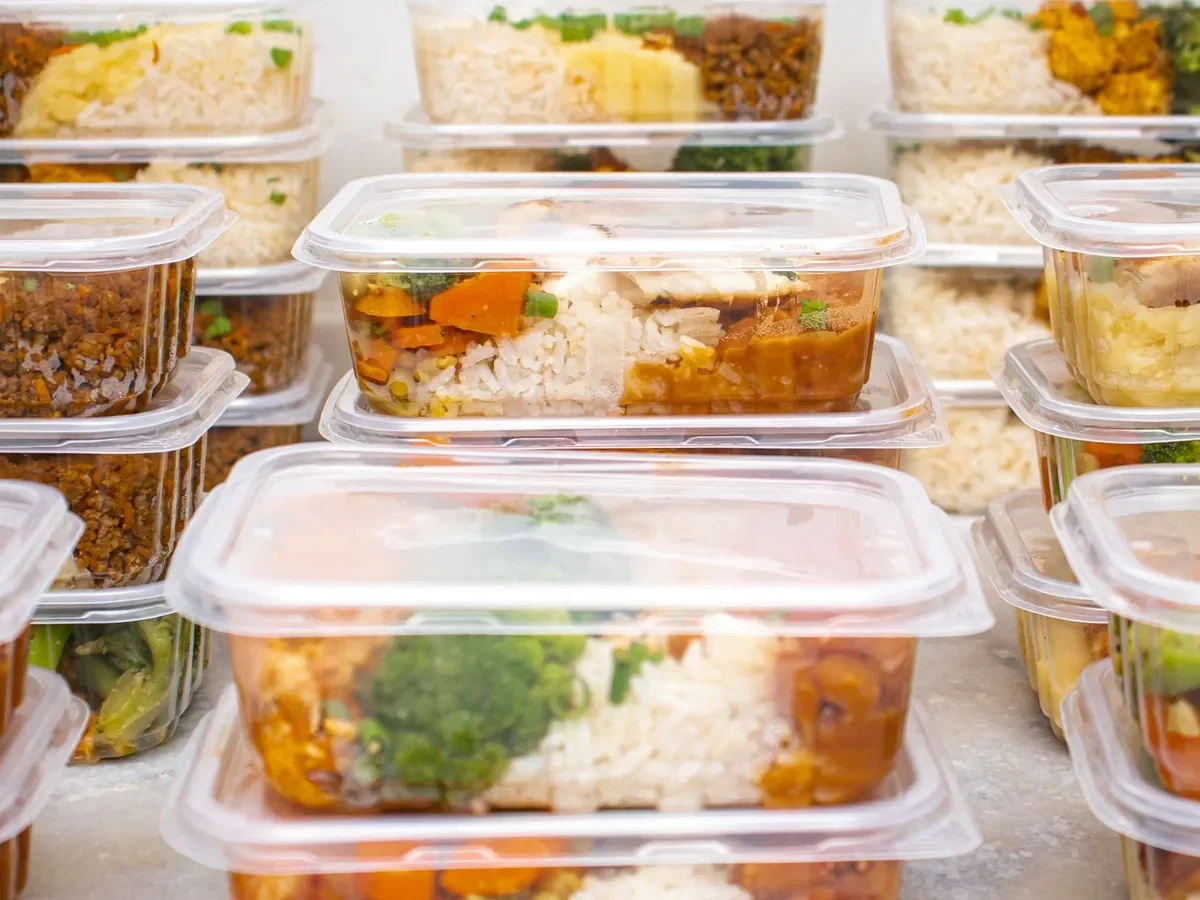
A simple three-meal structure with one snack looks like this. Breakfast runs about 350–400 kcal, lunch about 400–450, dinner about 500–550, and a snack about 150–200. Mix the sizes to suit your schedule.
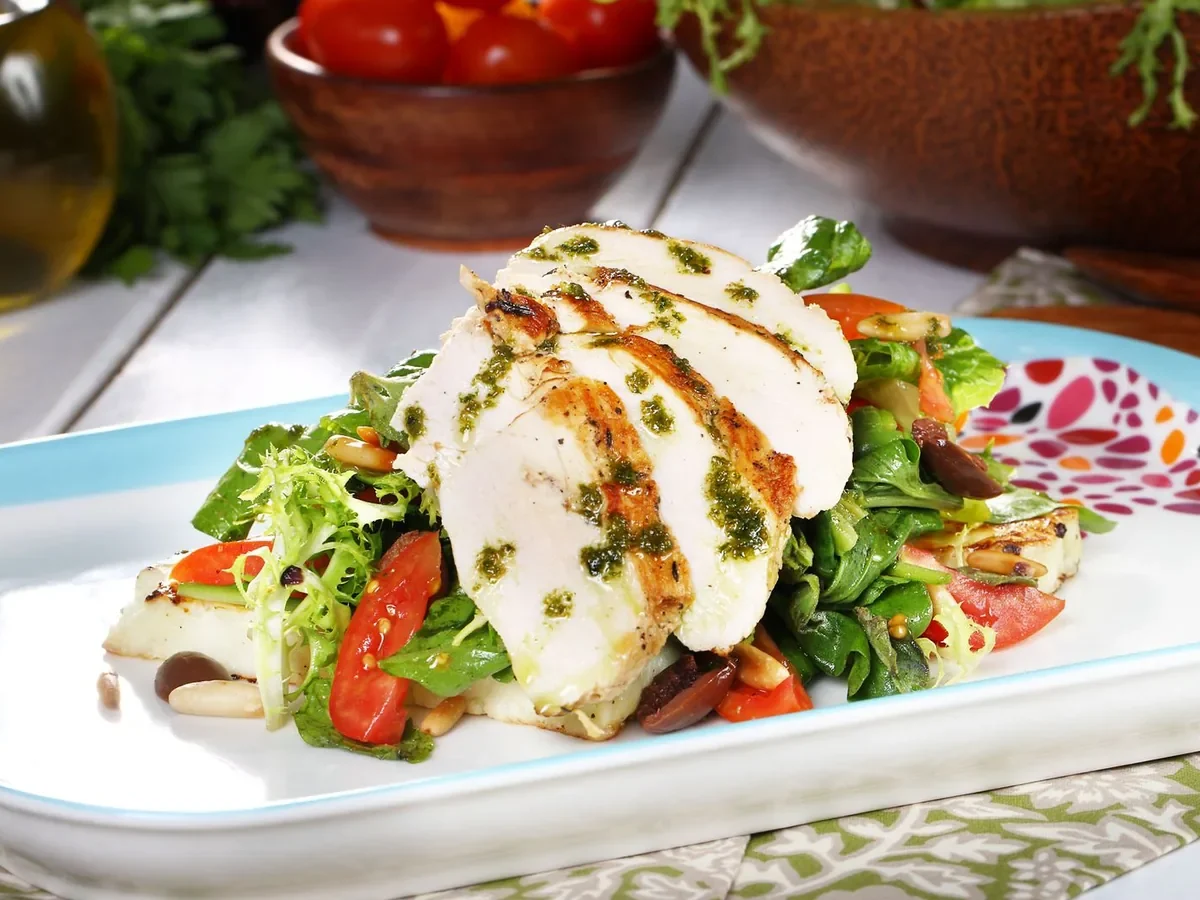
Here is one realistic example. Breakfast is eggs, toast, and fruit, around 380 kcal and 15 g of protein. Lunch is grilled chicken with vegetables and rice, around 420 kcal and 25 g of protein. Dinner is salmon with sweet potato and a salad, around 480 kcal and 30 g of protein. The snack is Greek yogurt with berries, around 160 kcal and 12 g of protein.
That adds up to about 1,440 kcal and about 82 g of protein, or roughly 22% of calories. It leaves a little room for cooking oil or an extra bite. Think of it as a pattern, not a recipe. You can swap foods of similar size and keep the structure.
Three meals plus a snack
Larger, more filling meals. Easy to plan around work and family dinners.
Two or three smaller meals plus snacks
Smaller portions more often. Better if big meals leave you sluggish.
There is no evidence that three meals beat five smaller ones for weight loss when total calories are the same. Pick the rhythm you can keep.
Macro targets: protein, carbs, fat
These are conventional ranges, not fixed rules. The macro calculator can turn them into numbers for your day.
Protein is the one to prioritize. The baseline for healthy adults is 0.8 g per kilogram a day. While you are cutting calories, 1.2–1.6 g per kilogram helps preserve muscle. At 1,500 kcal that often lands at 60–75 g a day, or about 16–20% of calories. Protein also helps you feel full. If you know your weight, the protein intake calculator gives a more personal figure. If you have kidney disease, check with your doctor before raising protein.
Carbohydrates usually make up 55–60% of calories, about 206–225 g. Fat is typically 20–30% of calories, about 33–50 g. Don’t cut fat to zero. It helps meals feel satisfying.
Fiber is 20–30 g a day, and the adequate intake for women 50 and under is 25 g. Raise it gradually and drink water as you do.
Keep sodium under 2,300 mg a day, the limit set in the Dietary Guidelines for Americans. For potassium, the National Academies set adequate intakes of about 2,600 mg a day for women and 3,400 mg for men. Bananas, leafy greens, beans, and sweet potato all help.
How to track calories without obsession
Free tracking apps and USDA FoodData Central both work. A food scale is the most accurate way to measure, cups are less accurate, and eyeballing is the least accurate. Weigh food in the state the database lists, because cooked food weighs less than raw.
Expect an error margin of about ±10–15%. These are estimates, not precision instruments. A steady habit beats a perfect log.
If logging causes stress or shame, stop and talk to a counselor or a registered dietitian. Tracking is a tool, and you can put it down.
Foods that fit a 1,500-calorie plan
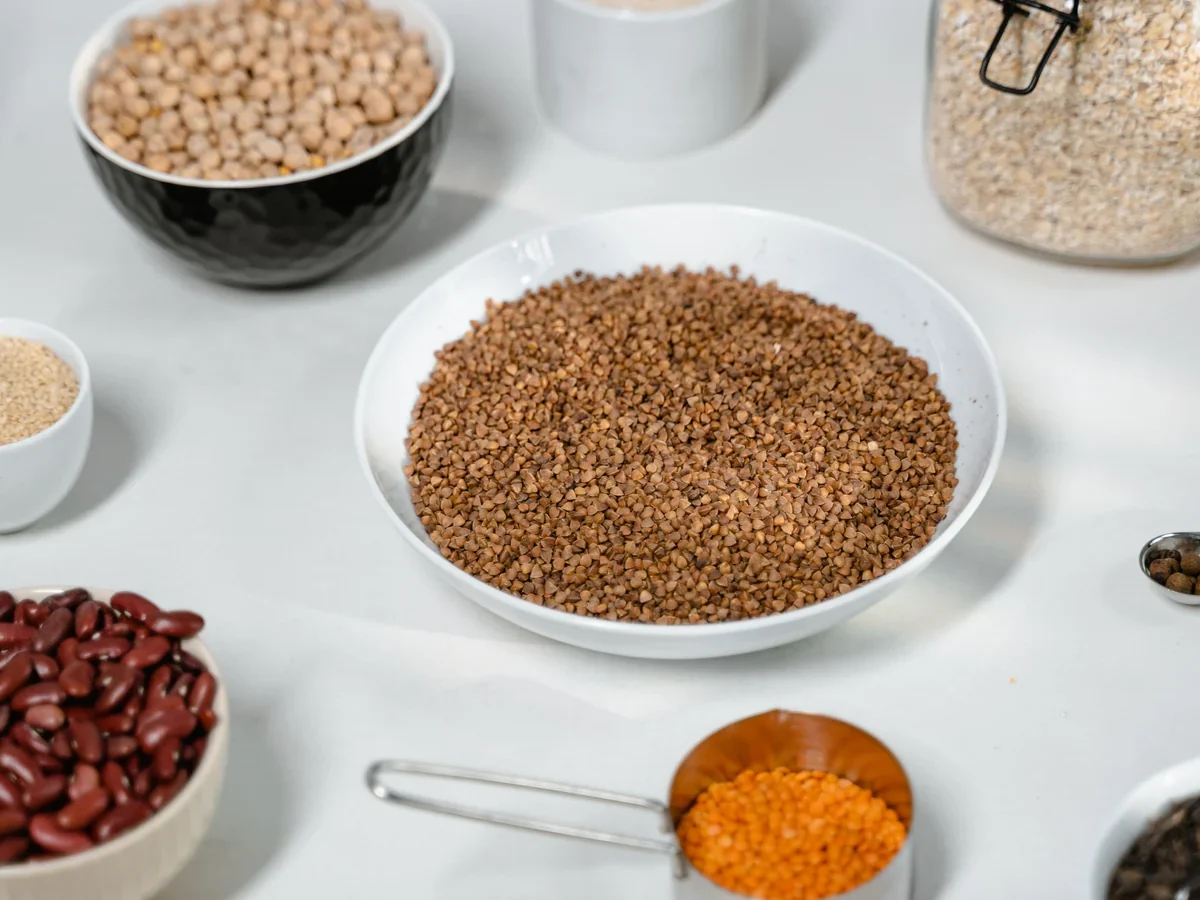
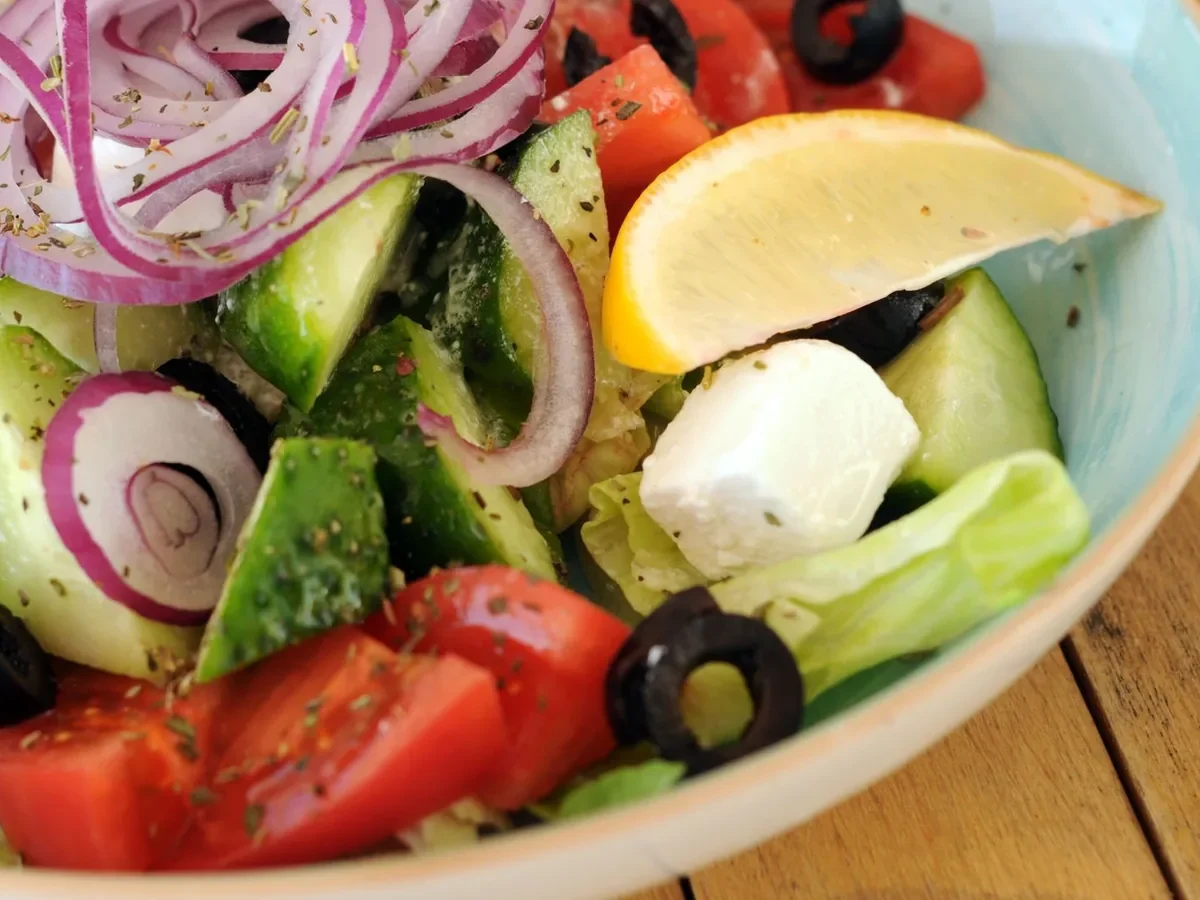
High-protein, lower-calorie foods include chicken breast, fish, Greek yogurt, tofu, cottage cheese, and eggs. High-fiber, lower-calorie choices include leafy greens, broccoli, Brussels sprouts, beans, lentils, and whole grains.
Healthy fats belong in small portions. Olive oil, nuts, avocado, and seeds are dense in calories. About 23 almonds come to roughly 160 kcal, so measure them.
What keeps you full is the combination of fiber, protein, and adequate fat. Foods to limit, not ban, are ultra-processed foods that are high in calories and low in satiety, sugary drinks, and fried foods.
On water, there is no single calorie-based rule. General guidance is 8–10 cups (64–80 oz) a day, or more if you exercise.
The first week: what to expect
Your first week may show a drop of 3–5 pounds. Most of that is water and stored carbohydrate (glycogen), not fat. Carbs hold water, so when intake falls, water goes with it.
Don’t over-celebrate and don’t panic. By weeks 2–4 the trend usually settles near 1–2 pounds a week. You may also feel tired for the first 3–5 days. That is common and usually improves.
- Estimate your burn. Use a calculator to find your daily needs and see where 1,500 kcal sits.
- Plan a pattern. Choose three meals and a snack, or smaller meals, and set a protein anchor for each.
- Measure for a few days. Use a scale or measuring cups so your estimates get realistic.
- Watch the trend. Judge progress over weeks, not days.
What slows progress and what doesn’t
Common real causes are eating more than you think, not drinking enough water, poor sleep, and stress. Under-counting is the most frequent mistake. Small untracked bites add up.
Myth
Dieting “broke” your metabolism, eating after 6 PM makes you gain, and carbs are the problem.
What the evidence says
Adaptation is real but modest, and it doesn’t stop loss. Total calories matter, not the clock. A deficit drives results, not macros alone.
How long can you sustain 1,500 calories?
For most healthy adults, 4–12 weeks is a reasonable stretch. Over months, it needs monitoring. Some people feel better at 1,600–1,700 kcal after the initial loss.
Signs to stop or adjust include persistent fatigue, hair loss, muscle loss, and obsessive thinking about food. Check in after 4 weeks with a healthcare provider or dietitian if you can.
When you reach your goal, raise calories gradually instead of jumping back to old habits.
Activity and exercise at 1,500 calories
Low-intensity walking is fine at this level and is already part of the 1–2 pounds a week math. Vigorous exercise like running or heavy lifting may call for more food. On hard training days, consider 1,600–1,800 kcal.
Strength training at least 2 days a week helps preserve muscle while you lose weight. Watch calorie estimates from fitness watches. They can be off by ±20–30%, so use them as a trend, not gospel.
When to talk to your doctor
Talk to your doctor first if…
You have diabetes, kidney disease, or heart conditions, or you take medications that affect appetite or metabolism.
Check in during the plan if you feel persistently dizzy or weak, notice hair loss, have lost your period, or feel obsessed with food or weight.
Stop and get help if you are skipping meals, exercising excessively, or thinking about food all day. Call or text 988, the Suicide & Crisis Lifeline, which also handles eating disorder crises. The ANAD Helpline offers peer support at 1-888-375-7767.
Want a personal starting point? Run your numbers in the calorie deficit calculator and see how 1,500 kcal compares with your own daily needs.
Go further
Protein intake calculator: get your daily protein range in grams.
Frequently asked questions
Is 1,500 calories enough?
For an average sedentary woman, it creates about a 1 pound a week loss. For men, active people, or very tall or heavy individuals, it may be too low. Check with a doctor.
Can I stay at 1,500 forever?
Not without check-ins. Most people adjust after 12 weeks and find a higher intake they can sustain.
What if I’m hungry all the time?
Prioritize protein, fiber, and water. If hunger persists after 2 weeks, talk to your doctor. You may need a higher target.
Do I need keto, paleo, or another named diet?
No. Weight loss happens at a calorie deficit with any diet composition. Pick what you can stick to.
What about cheat days?
One meal won’t derail you, and neither will one day. Your weekly average matters more than daily perfection.