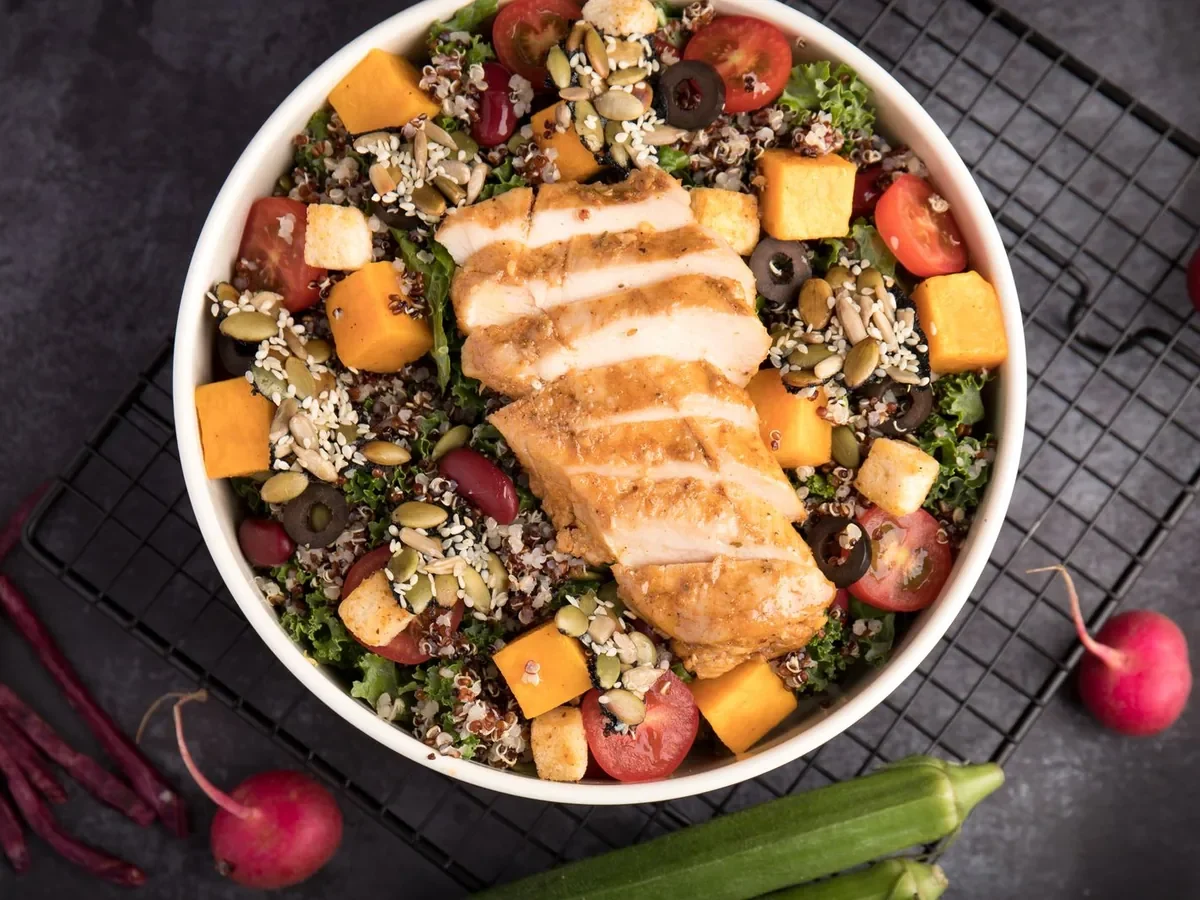
A high-protein meal for weight loss is built around one clear protein anchor: eggs, fish, poultry, lean meat, beans, tofu or dairy. This page gives you 10 of them, plus the reasoning behind the list. Meals are tools, not solutions on their own. A calorie deficit and regular activity still do the deciding.
Key takeaways
While you eat fewer calories, the target range is 1.2–1.6 g of protein per kg of body weight per day, in line with the Dietary Guidelines for Americans 2025–2030.
A practical starting point for adults is 25–40 g of protein per meal, across 3 meals a day. Meals with at least 30 g are linked to noticeably higher fullness.
Protein helps you hold on to lean mass and feel full while you eat less. It does not cause weight loss by itself.
How this list works
A ranking without criteria is just an opinion. These are the six filters every meal below had to pass.
- Real protein. The meal is built to reach at least 25 g of protein.
- Easy ingredients. Nothing rare or expensive. A regular grocery store has it all.
- Fast to make. It comes together in under 20 minutes on a weekday.
- Keeps you full. The approach fits what satiety research shows, including the Leidy studies in the American Journal of Clinical Nutrition.
- Varied sources. Egg, fish, poultry, meat, legumes and dairy all show up, so you are not eating chicken three times.
- No hype. No fat-burning claims and no promise about speed.
There is no “best” meal here. Each entry says who it suits and where it falls short. Your age, activity level, budget and allergies decide what works for you.
Why protein matters when you eat less
When you cut calories, you can lose some muscle along with fat. Higher protein intake helps limit that. A study of weight-loss participants in the National Weight Control Registry found that higher protein intakes predicted a leaner body composition.
The target while restricting calories is 1.2–1.6 g per kg of body weight per day. That range matches the federal Dietary Guidelines and research including Wycherley and colleagues (AJCN, 2012) and Leidy and colleagues (AJCN, 2015). If you are new to this, start near the low end. If you hit a plateau, you can move up within the range.
Fullness is the second benefit. A review in the AJCN found that meals with at least 30 g of protein produce significantly higher satiety than meals with less. Digesting protein also costs the body more energy than digesting carbohydrate or fat. That adds a small piece to the picture, alongside the fullness effect.
Breakfast gets special attention. Leidy and colleagues found that eating more protein at breakfast led to an early and sustained feeling of fullness, along with less evening snacking. That does not make breakfast magic. It means a protein-heavy first meal is an easy place to begin.
Talk to your doctor first if…
You have chronic kidney disease. Discuss any higher protein intake with your doctor before you change how you eat. Check in first, too, if you take medication, are pregnant, are under 18, or have a history of disordered eating. This page is general information and does not replace medical advice.
The 10 meals
The order is 3 breakfasts, 3 lunches, 2 dinners and 2 snacks. The only protein figure given is the one for the egg example. For the others, check the labels on your own ingredients and adjust portions toward your per-meal target.
1. Egg-and-avocado toast (breakfast)
Who it’s for: anyone who wants something quick, cheap and familiar.
Scramble 3 eggs, about 18 g of protein, and serve them on 1 slice of whole-grain bread with half an avocado. It takes about 10 minutes.
Honest limit: it is low in fiber unless you add vegetables. Put tomato or spinach on top.
2. Plain Greek yogurt bowl with berries and chopped nuts (breakfast)
Who it’s for: people who do not want to cook in the morning.
Dairy is the protein anchor. The berries add fiber and the nuts add crunch. It takes a few minutes and needs no stove.
Honest limit: flavored yogurts can carry a lot of added sugar and less protein. Buy plain and sweeten it with the fruit.
3. Vegetable omelet with feta (breakfast)
Who it’s for: people who like a hot, savory breakfast and want vegetables early in the day.
Eggs again, but with peppers, onions and greens folded in, and a little feta for flavor. It is a good way to use up leftover vegetables.
Honest limit: feta is salty, so use it sparingly. If you already ate the egg toast this week, vary the rest of your day.
4. Chicken and chickpea salad (lunch)
Who it’s for: meal preppers who want lunch ready ahead of time.
Cooked chicken, chickpeas, chopped vegetables and a simple dressing. Poultry and legumes in one bowl make it easier to reach your per-meal goal.
Honest limit: a heavy dressing can overwhelm the rest of the bowl. Measure it.
5. Tuna and white bean plate (lunch)
Who it’s for: people who want fish without any cooking.
Canned tuna, white beans, lemon, olive oil and herbs, served over greens. Fish and beans together make it filling and quick.
Honest limit: it can taste repetitive by midweek. Switch up the herbs and vegetables.
6. Lean beef and black bean chili (lunch)
Who it’s for: people who want a big batch that reheats well.
Lean ground beef, black beans, tomatoes and spices. Make a pot on the weekend and portion it out.
Honest limit: it takes longer than 20 minutes the first time, so it is a batch-cooking meal rather than a same-day one.
7. Baked salmon with lentils and greens (dinner)
Who it’s for: people who want a sit-down dinner with minimal effort.
Season the salmon, bake it, and serve it over lentils with a pile of greens. Fish and legumes together cover a lot of ground.
Honest limit: salmon costs more than most proteins on this list. Canned fish works too.
8. Tofu and vegetable stir-fry (dinner)
Who it’s for: vegetarians and anyone who wants a meatless night.
Firm tofu, mixed vegetables and a light sauce, served over a modest portion of rice. Press the tofu first so it browns.
Honest limit: sauces add up quickly. Go easy, and make the tofu portion large enough to count as your protein anchor.
9. Cottage cheese with fruit (snack)
Who it’s for: an afternoon gap when you would otherwise grab something processed.
A scoop of cottage cheese with sliced fruit. It is dairy protein with almost no prep.
Honest limit: the texture is not for everybody, and it is not a full meal on its own.
10. Turkey and cheese roll-ups (snack)
Who it’s for: people who need something portable for work or school runs.
Sliced turkey wrapped around cheese and a cucumber spear. No cooking, and easy to pack.
Honest limit: deli meat can be high in sodium. Read the label and pair it with produce.
Breakfasts and snacks
Egg toast, Greek yogurt, the vegetable omelet, cottage cheese and turkey roll-ups rely on eggs, dairy or poultry. All are fast, and none needs more than a few minutes of work. Egg toast is the one entry with a stated figure: 18 g from the eggs.
Lunches and dinners
The chicken and chickpea salad, tuna and white bean plate, beef chili, salmon with lentils and tofu stir-fry cover poultry, fish, meat, legumes and soy. The chili is the slow one. The rest fit the under-20-minute goal.
Across the list you get egg, dairy, fish, poultry, beef, legumes and tofu. At the same protein intake, meat and legumes look similar for fullness, so pick what you will actually eat.
Not sure where your daily number lands? Enter your weight and goal in the protein intake calculator, then split the result across your meals.
Go further
How Much Protein to Lose Weight
High Fiber Foods for Weight Loss
Protein intake calculator: get your daily protein range in grams.
Frequently asked questions
Can I eat the same high-protein meal every day?
You can. Variety usually makes it easier to stick with, though, so rotate a few of the meals above.
Do I need 1.6 g/kg or is 1.2 enough?
The range is 1.2–1.6 g/kg per day. Start at 1.2 and move up if you hit a plateau.
What if I’m vegetarian?
Build meals around legumes, tofu, dairy and nuts. The tofu stir-fry, the Greek yogurt bowl and the cottage cheese snack all work without meat or fish. Add beans to salads and bowls.
Will high protein alone make me lose weight?
No. Protein helps you keep muscle and feel full, which makes eating less easier. A calorie deficit and regular activity are what drive weight loss. The calorie deficit calculator can help you size that deficit.