The best low-calorie snacks come in under 150 kcal and pair protein, fiber, or sheer volume. Calories alone won’t keep you full until dinner. Below, nine snacks are ranked on how much fullness they give per calorie, each with who it suits and where it falls short.
Key takeaways
Fullness per calorie comes from protein, fiber, and volume. A snack that has none of the three is usually hungry again within a couple of hours.
A snack under 150 kcal fits inside a 1–2 lb a week pace, which is the range the CDC links to safe weight loss.
Every snack here has a limit. Most need a partner, such as a protein with a fruit or a vegetable with a dip.
What makes a low-calorie snack work?
A snack is the margin between hunger and sticking to your plan. It isn’t the diet itself. Three things decide whether it does that job.
Protein. It helps preserve lean mass while you eat in a calorie deficit. Intakes of 1.2–1.6 g per kg of body weight per day are linked to better satiety. The NASEM RDA of 0.8 g per kg is the baseline, not the ceiling for people dieting.
Fiber. It slows digestion and adds bulk. The Dietary Guidelines target 14 g per 1,000 kcal. The NASEM adequate intake is 25 g for women and 38 g for men up to age 50.
Water and volume. Foods that take up room on the plate fill the stomach for few calories. Eating slowly and drinking water alongside cold snacks adds to that sense of fullness.
Why a ceiling of 150 kcal? The CDC ties a pace of 1–2 lb a week to roughly a 500 kcal daily deficit. A snack larger than 150 kcal eats a big share of that margin.
Myth
Anything labeled “low-calorie” will keep you satisfied.
What the evidence says
Snacks high in sugar and low in protein and fiber can bring hunger back about 2 hours later. Rice cakes on their own and flavored low-fat yogurt with no fiber are the usual examples.
The ranking: nine snacks, ordered by satiety per calorie
The order reflects the three criteria above, weighted toward protein and fiber. Calories are listed for the stated portion. Check the label on anything packaged, since amounts vary by maker and size.
1. Roasted edamame (½ cup, shelled)
Who it’s for: People who like savory, protein-forward snacks that taste fine cold.
What sets it apart: A serving delivers 11–13 g of protein and 5–7 g of fiber for about 95–105 kcal. That is one of the strongest protein-to-calorie ratios on the list.
The limit: In-pod edamame takes time to shell. Store-bought versions can be salty, so look for unsalted.
2. Nonfat Greek yogurt with berries
Who it’s for: Sweet-tooth snackers who want something creamy and portable.
What sets it apart: About 130 kcal with 17 g of protein, plus natural sweetness and some fiber from the fruit.
The limit: Some nonfat yogurts add sugar, so look for under 10 g on the label. Berries can cost more in some months.
3. Hard-boiled egg (1 large)
Who it’s for: Anyone who wants protein with no prep at snack time.
What sets it apart: 71 kcal, 6 g of protein, a complete amino acid profile, and no carbs.
The limit: One egg alone doesn’t fill most people for long. Pair it with an apple or a vegetable. The yolk contains cholesterol. That is a non-issue for most people, but check with your doctor if you have familial hyperlipidemia.
4. Low-fat cottage cheese (½ cup)
Who it’s for: People who want fullness that lasts and don’t mind a creamy texture.
What sets it apart: 80 kcal and 14 g of casein, a slow-digesting protein that releases amino acids over hours.
The limit: Sodium can run high, so compare labels. The texture puts some people off.
5. Sliced turkey breast (3 oz)
Who it’s for: Lunch-box snackers who want something ready to eat.
What sets it apart: 90 kcal and 15 g of protein, with no fat.
The limit: Deli turkey is processed meat and can be high in sodium, so keep it occasional rather than daily. Add a vegetable or a whole grain.
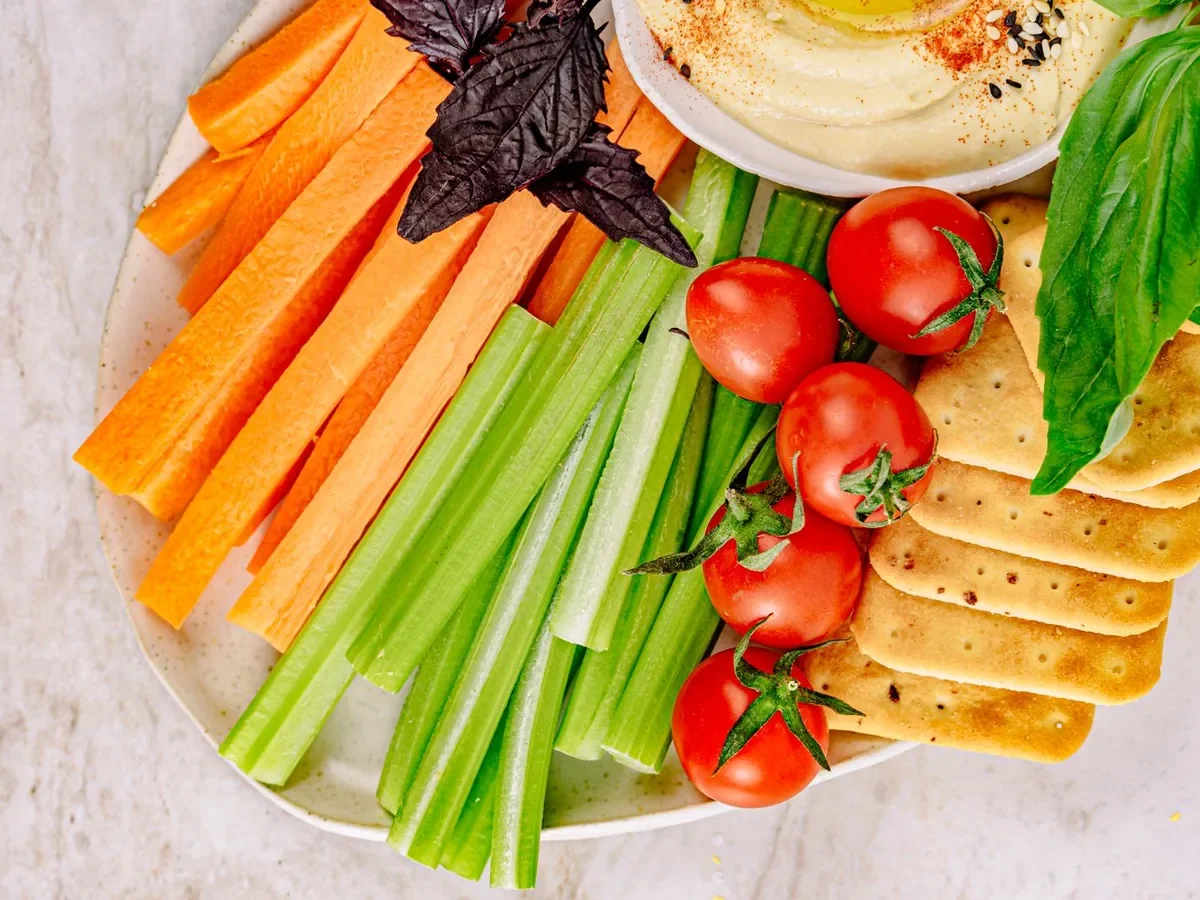
6. Hummus with raw vegetables (3 tbsp plus 1 cup)
Who it’s for: Crunch-and-dip fans who want the biggest-feeling snack in this range.
What sets it apart: About 110 kcal in total. The hummus brings 3.4 g of protein and 2.6 g of fiber. Celery, carrot, bell pepper, and cucumber add bulk for almost no calories.
The limit: Hummus runs 15 kcal per tablespoon, so it is easy to over-scoop. Store-bought tubs may contain added oils.
7. Air-popped popcorn, plain (3 cups)
Who it’s for: Volume lovers on a budget who want to eat a lot.
What sets it apart: 90 kcal and 4 g of fiber, and a big bowl for the calories.
The limit: It has almost no protein. Microwave packets and bagged versions add oil and salt, so air-pop it yourself. Pair it with a handful of nuts or a piece of cheese.
8. Fresh fruit (1 medium apple or 1 cup of berries)
Who it’s for: People who want natural sweetness with zero prep.
What sets it apart: An apple is 95 kcal with 4.4 g of fiber. A cup of strawberries or diced watermelon is 46 kcal. Both add hydration.
The limit: Fruit has no protein, and the sugar affects some people’s blood sugar more than others. Pair it with cheese or nut butter.
9. Sugar snap peas (1 cup, raw)
Who it’s for: Anyone who wants the lowest-calorie crunch.
What sets it apart: About 30 kcal and 2 g of fiber, naturally sweet and full of water. A cup of cherry tomatoes is another light option at 27 kcal.
The limit: Little protein, so dip them in hummus or eat them with cheese. Price and availability vary by season and region.
The numbers side by side
Protein-first snacks
Egg (71 kcal), cottage cheese (80 kcal), turkey (90 kcal), and yogurt with berries (130 kcal). They are compact and hold hunger off longest, but most are small in volume and some are high in sodium.
Volume-first snacks
Hummus with vegetables (110 kcal), popcorn (90 kcal), and sugar snap peas (30 kcal). They give you a lot to eat for the calories, but protein is low, so pairing matters.
The simplest approach combines the two groups. A hard-boiled egg with sugar snap peas, or an apple with a slice of cheese, covers protein, fiber, and bulk in one go.
When not to reach for a low-calorie snack
Hunger late at night. A small snack may not settle it. Herbal tea or water is often enough.
Around hard exercise. Muscles need carbs and protein, and a snack this small may fall short. A proper meal beforehand does the job better.
Dizzy, shaky, or very low on energy. That can signal low blood sugar, especially for people with diabetes who take medication. Eat a carb-and-protein combination and get medical advice.
During a crash diet or very low-calorie diet. Snacks should help you stay on a safe calorie level. They shouldn’t replace meals or squeeze intake lower.
Talk to your doctor first if…
You have diabetes, kidney disease, or high cholesterol, you take medication that affects appetite or digestion (a GLP-1 drug, for example), or you are pregnant, nursing, or have a history of disordered eating. This list is general information for healthy adults. It isn’t tailored to any medical condition.
What to do this week
- Pick two snacks. Choose one protein-first and one volume-first option from the ranking.
- Check the labels. Look at calories per serving, sodium, and added sugar. Yogurt should have under 10 g of sugar.
- Measure the dense ones. Hummus and nut butter add up fast, so scoop them rather than pour.
- Eat slowly with water. Chewing well and sipping water helps the fullness register.
- See how it fits. Compare your snacks to your daily target with the calorie deficit calculator.
If you want to see whether your protein is in range, the protein intake calculator gives you a number to work from.
Go further
High Fiber Foods for Weight Loss
Protein intake calculator: get your daily protein range in grams.
Frequently asked questions
Can I eat the same snack every day?
Yes. Variety brings different nutrients, but rotating a few favorites beats forcing yourself through something you dislike. You might do edamame on some days and yogurt on others.
Do these snacks fit into intermittent fasting?
Eating during a fasting window breaks the fast. Eating windows depend on the protocol, such as 16:8 or 5:2, so check yours or ask a dietitian if you are unsure.
What if I don’t like any of these?
Look for the same three traits. Mozzarella string cheese is about 80 kcal with 7 g of protein. Homemade roasted chickpeas run about 150 kcal per cup and are high in fiber. Unsalted almonds are 164 kcal per ounce with 6 g of protein and 3.5 g of fiber. That is a bit higher in calories, but very filling.
Are store-bought low-calorie snack bars worth it?
Read the label first. Many come in under 150 kcal but are high in added sugar and low in protein and fiber. The whole foods above generally give more fullness per calorie.
Can I eat these if I take medication?
Individual foods rarely interact with medication. Meal size and timing can. If your medication affects hunger or digestion, ask your prescriber before changing how much or when you snack.